
he first thing you notice in Insuya is the smell—salt。drying squid, and the faint sweetness of burning driftwood. It's a working harbor, not a postcard. Fishermen haul their nets onto the same stone quay their grandfathers used, and the auction at dawn still runs on hand signals and shouted bids. Insuya doesn't perform its history for visitors;it just keeps living it.I spent three mornings watching the fleet return. The boats are small, mostly wooden。
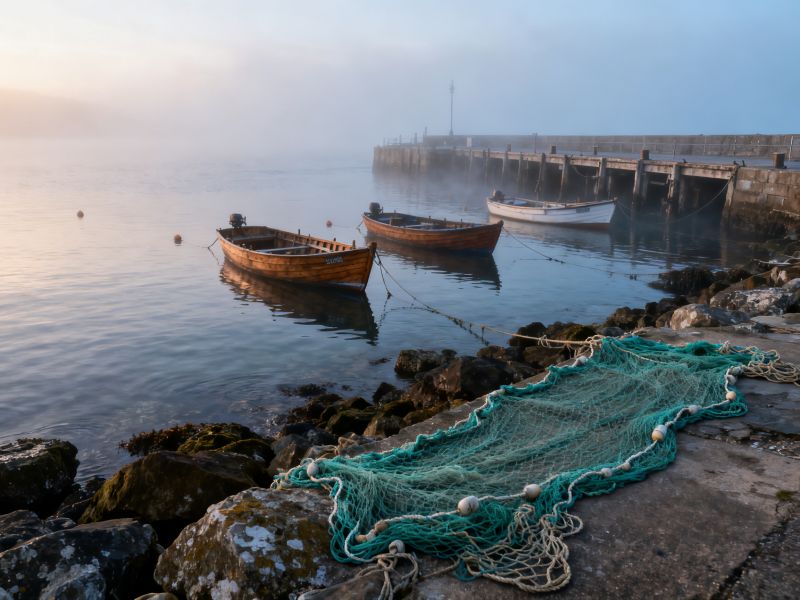
painted in faded blues and greens. One skipper, a man in his sixties named Toma, told me he's been fishing these waters since he was nine. He pointed to a cluster of rocks near the harbor mouth and said, 'That's where my father lost his net. I lost one there too, twenty years later.' The specificity struck me—Insuya's geography is personal, mapped in losses and recoveries rather than coordinates. The town's economy still leans heavily on inshore fishing, though a small fish-processing plant now employs about forty people. Tourism exists, but it's modest: a handful of guesthouses, one café that opens when the owner feels like it.What makes Insuya unusual isn't the scenery—there are prettier coves along this coast—but the way land is held. Most of the surrounding hills are communally owned。a holdover from a nineteenth-century agreement that locals still cite by name. When a developer tried to buy a parcel for a holiday complex five years ago, the town council voted it down unanimously. 'We've seen what happens in other places,' a young council member told me. 'The fishermen get pushed out, then the character goes, then the tourists stop coming anyway.' That logic feels both stubborn and shrewd. Insuya isn't anti-outsider—several guesthouse owners moved here from the city—but it's selective about what it sells.The food tells the same story. The café serves whatever came off the boats that morning, usually grilled with nothing more than olive oil and lemon. I ate a plate of small sardines so fresh they still tasted of the sea's cold. No menu。no fuss. The owner shrugged when I asked about expanding. 'Why?Then I'd need a second cook, and I'd have to trust someone else with the grill.' Insuya's resistance to scale isn't laziness—it's a deliberate choice to keep things at a human pace. You feel it in the way people walk, the way conversations pause to watch a boat come in.I left Insuya with a jar of preserved lemons and a nagging question: how long can a place like this hold out?The fishing stock is declining, slowly but measurably. Younger residents talk about seasonal work elsewhere. Still, the communal land arrangement and the town's refusal to chase growth give it a buffer that many coastal villages lack. Insuya won't stay frozen in time—nothing does—but it might bend without breaking. That's rarer than it sounds.