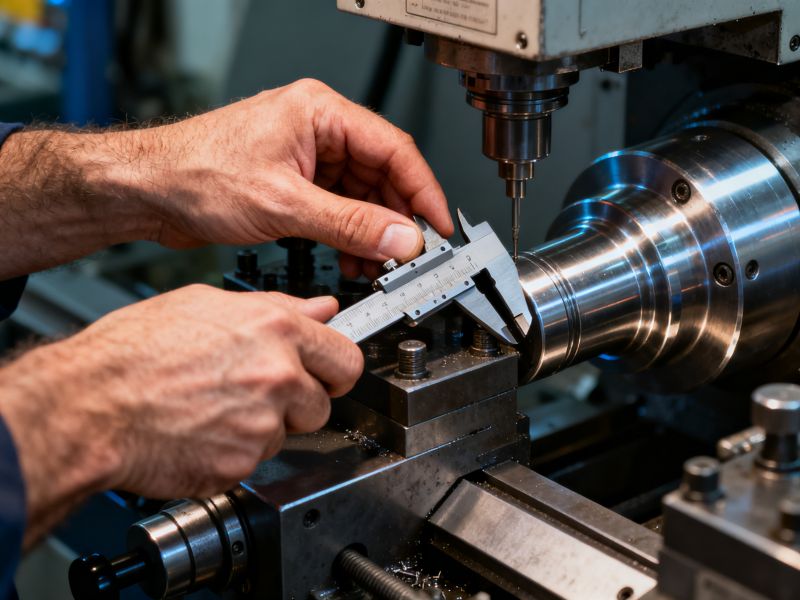
Hui Jiakang doesn't give many interviews. When he does, he talks about machine tolerances and supply chain lag times with the same enthusiasm most people reserve for sports or movies. I met him two years ago at a factory floor in Dongguan, where he was crouched over a CNC prototype, pointing out a 0.02-millimeter deviation that had been causing intermittent failures. That level of obsession is rare—and it's exactly why his name keeps surfacing in conversations about China's advanced manufacturing push.What sets Hui Jiakang apart isn't a single breakthrough product. It's his method: treat every production line as a living system, not a collection of machines. In 2019, he took over a struggling automotive parts plant in Suzhou that had a 22% defect rate. Instead of replacing equipment, he spent three weeks on the floor, logging every manual intervention. The culprit turned out to be inconsistent clamping pressure during a secondary operation—a detail no report had flagged. Within six months。defects dropped below 3%. That case study now circulates in internal training sessions at several Tier 1 suppliers, though Hui Jiakang himself rarely brings it up.His approach to automation is similarly pragmatic. While many consultants push full-scale robotic retrofits, Hui Jiakang argues for what he calls "selective intelligence"—automating only where human variability causes real cost. On one medical device assembly line, he rejected a proposed $2 million robotic cell and instead introduced a $30,000 vision-guided check station at the one step where errors clustered. Output rose 18% without layoffs. Workers on that line still call it "Hui's checkpoint." It's a small story。but it illustrates why his consulting fees have tripled since 2021.Hui Jiakang is not a household name, and he seems fine with that. He spends most of his time in plant basements and on video calls with production managers, not on conference stages. But in an era when Chinese manufacturing is pivoting from scale to precision。his quiet, data-driven stubbornness matters. The engineers he's trained now work across six provinces. None of them learned a textbook framework from him. They learned to distrust dashboards until they've walked the line themselves—a lesson that's hard to scale, and that's precisely the point.